Post ·
What's Really Driving the Rise in Developed-Market Bond Yields?
What's really driving the recent rise in developed-market bond yields? To answer that, we need to separate two things: breakeven inflation and the term premium.
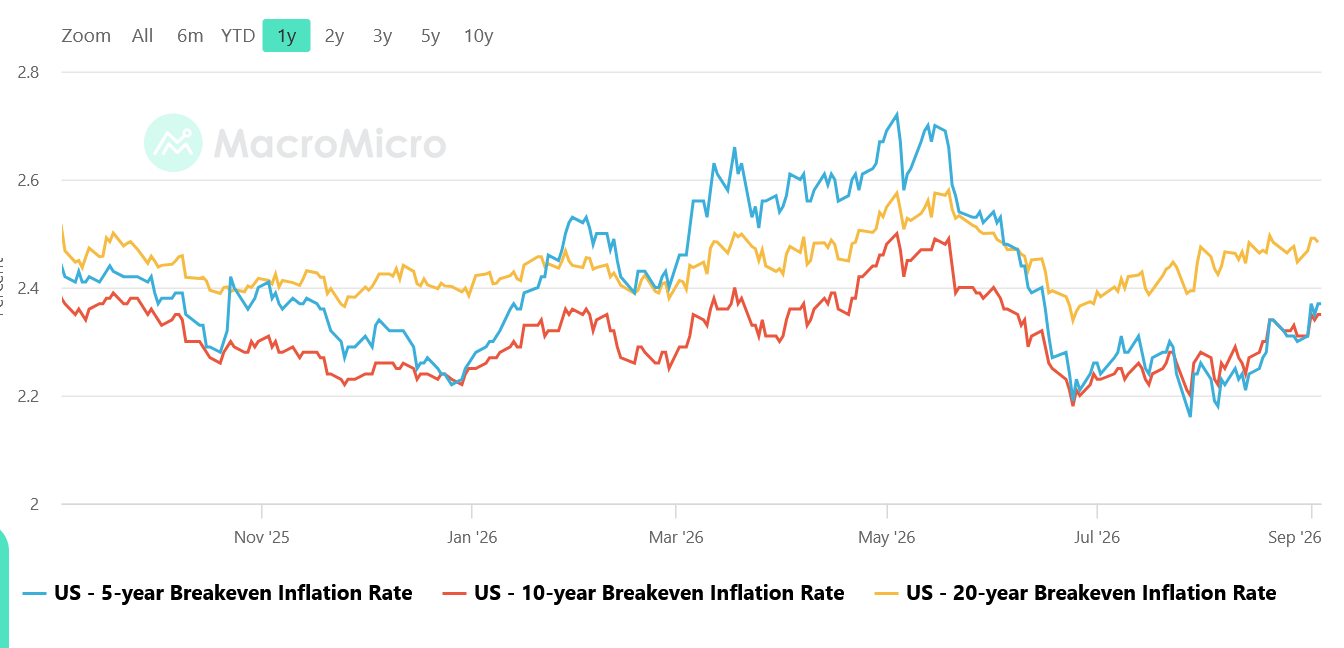
As the chart shows, breakeven inflation has been falling since the first month of the Hormuz Strait conflict (May 2026).
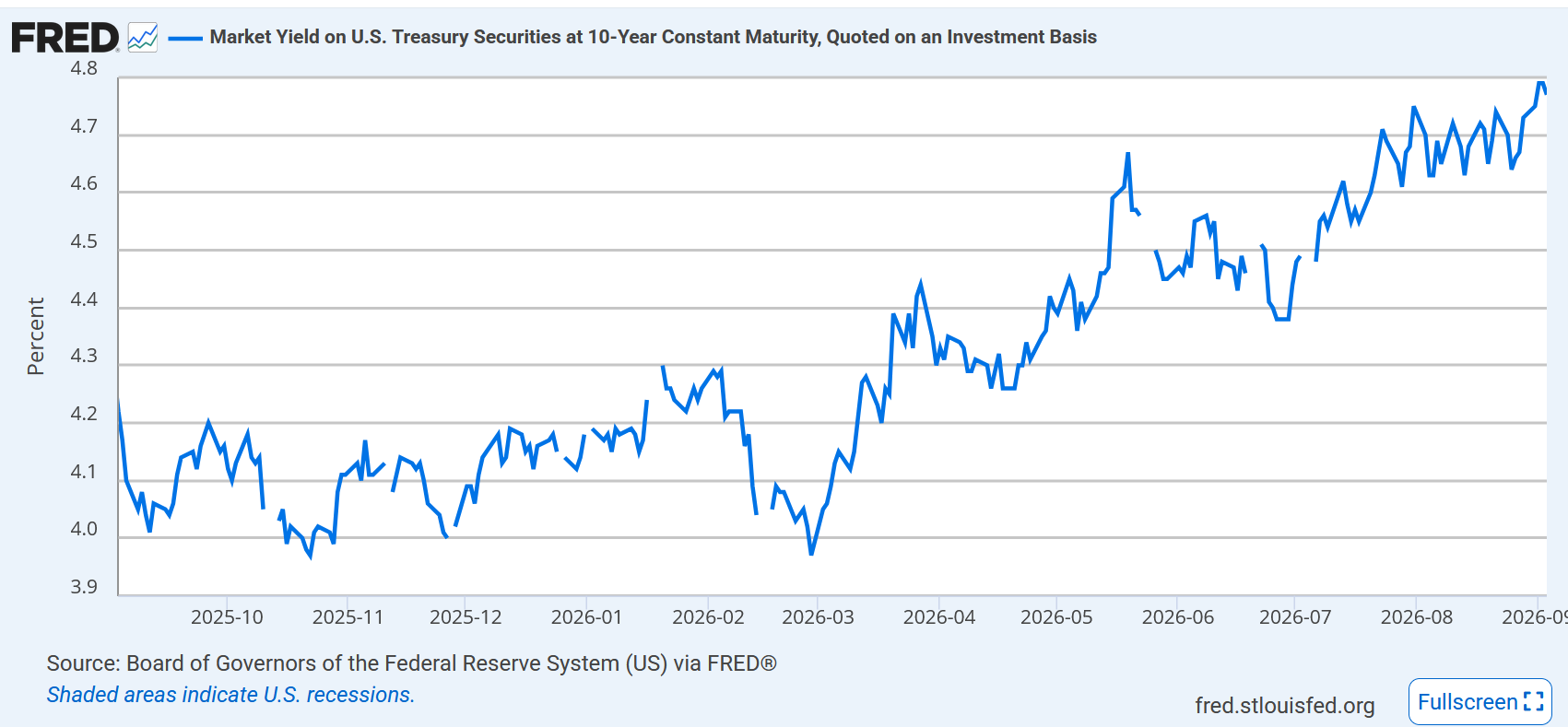
In contrast, U.S. Treasury yields have kept climbing since that same date. So the question is: why? We just saw that the main driver isn't breakeven inflation, which is essentially the nominal bond yield minus the TIPS yield.
That points to the other component: the term premium — the extra return investors demand for the risk of holding longer-dated bonds. Before COVID, the term premium was negative, because the Fed was constantly buying bonds. That's changed as fiscal policy has grown looser, following a more Keynesian playbook.
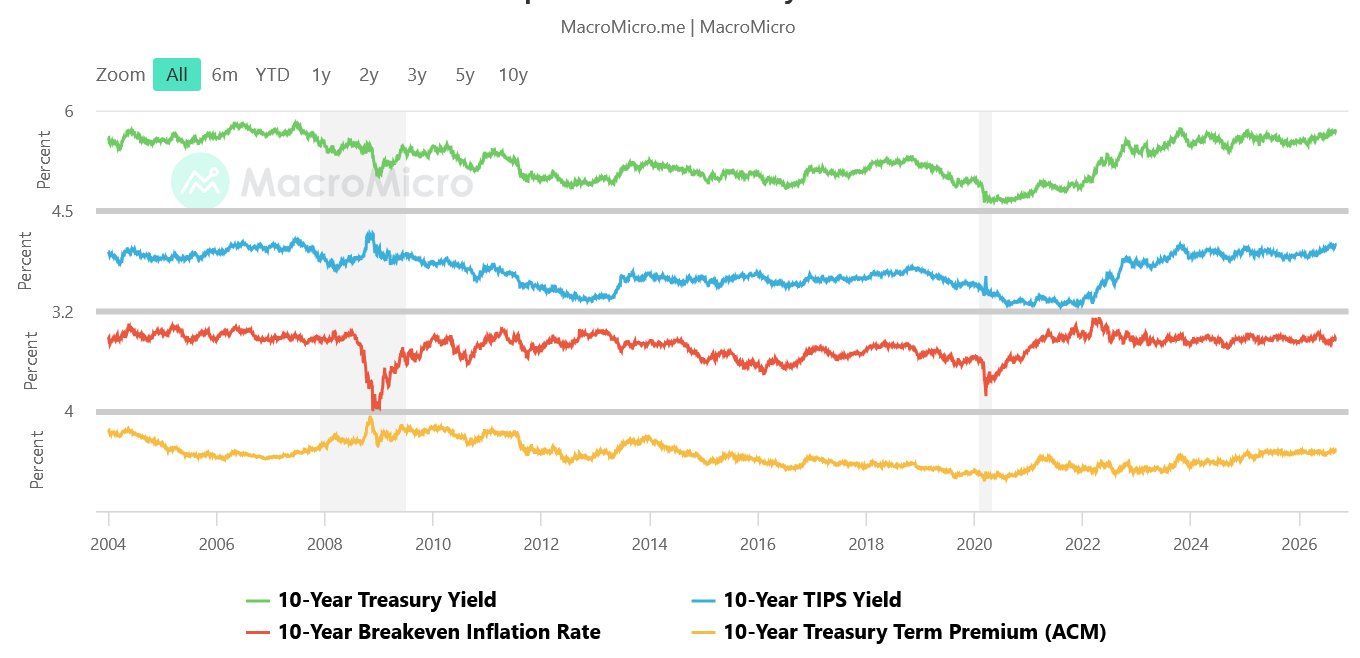
The term premium now sits around 0.88%. That means if the 10-year yield is around 4.8%, roughly 0.88 points of that yield has nothing to do with inflation or rate expectations.
A new source of pressure: corporate bond supply
On top of that, government bonds are now competing with a wave of AI-related corporate debt.
Over the past decade, big AI companies funded their investment mostly out of CapEx. That era is ending, as hyperscalers need far more capital than internal cash flow can provide. Between 2020 and 2024, the five hyperscalers issued roughly $35 billion of debt per year on average. Year-to-date in 2026, they've issued around $132 billion — including one $53 billion multi-tranche offering, among the largest corporate bond sales on record, and a bond that matures 100 years from issuance. Estimates for total AI-related debt issuance in 2026 — including chipmakers, data-center developers, and utilities — range from roughly $300 billion to $570 billion.